
Understanding the impact of migration on children

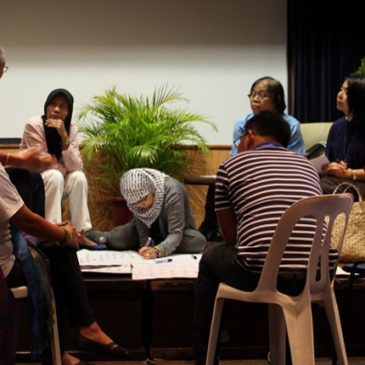
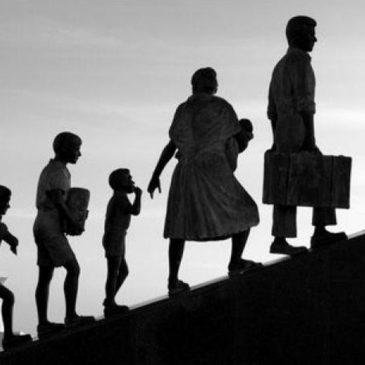
Much has been written about migrant workers and their lives and trials working in foreign country.  What is often overlooked, however, is what happens to the children who are left behind by their migrant worker parents.

How do the children cope with the absence of one or both parents? How are these children perceived by a society that still values traditional family and gender roles? To what extent does migration change the idea of child welfare or parenthood?
Building a community of Jesuit schools

posted in: Education, JCAP News | 0

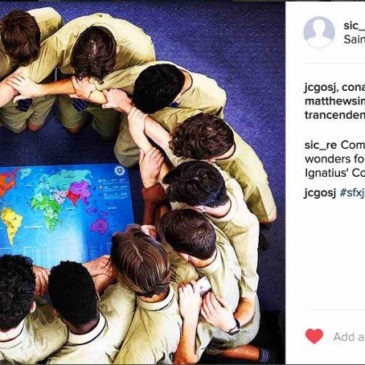
#sfxjcap2016.  In October this hashtag began appearing in Instagram as students, faculty and staff of Jesuit schools in Asia Pacific posted photographs of themselves and their friends in front of the Educate Magis map in their schools. The photos were entries to the St Francis Xavier Global Network Instagram Competition.

Educate Magis is an online community that connects educators from more than 2,000 Jesuit and Ignatian schools all over the world and the map shows the rich diversity and wide reach of the global network of Jesuit schools.

Responding to ecological challenges in Asia Pacific

Drought and flooding are the two most significant ecological challenges in Asia Pacific, according to participants in the first Reconciling with Creation Reflection Workshop.  According to the workshop report released in October, drought was foremost in the minds of the participants, named by 11 people from eight countries.  Flooding was a close second, named by 10 participants from six countries.  But these are just two of the host of ecological challeng

One foot in the air

posted in: Education, JCAP News | 0

One foot on the ground, another in the air – always on a journey to serve God.  This is an image Fr Ross Jones SJ, President of Saint Ignatius’ College, Riverview in Sydney, Australia uses to show what it means for students and teachers in a Jesuit school to be contemplatives-in-action.

Directing greater energies to the poor and the peripheries

When Pope Francis visited the Philippines in January 2015, his message to the Philippine Province of the Society of Jesus was clear: to go to the poor and the peripheries.  It shone a light on what then Fr General Adolfo Nicolás had asked of the whole Society when he convoked General Congregation 36 in December 2014, which was to reflect prayerfully on what more the Eternal King is calling the Jesuits to do.

Affirming engagements with Indigenous Peoples in the Philippines

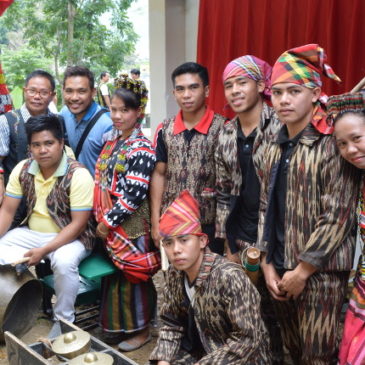
An important area of concern for the Philippine Jesuits is the continuing poverty and marginalisation of indigenous peoples, the largest concentration of which can be found in Mindanao, southern Philippines.  The island is home to 18 indigenous tribes whose lives and cultures are threatened by pervasive military conflicts between government and rebel groups, and the degradation of their natural environment.

Eleven Jesuits ordained as deacons in the Philippines

Eleven Jesuits were ordained to the Order of Deacons on October 29 in the Church of the Gesu, Ateneo de Manila University in the Philippines.  The new deacons are Soo Young Park, Changmo Cho, Chang-hyon Lee, Kyoung-Woong Peter Park, Anthony Ochen, Leslie Joseph Bingkasan, Stephanus Advent Novianto, Harvey Mateo, Martin Licup, Felipe Yohan Jr and Roseller Atilano Jr.

A path to self-determination through education

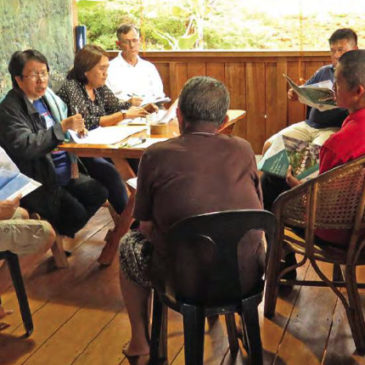
A close encounter with the Tboli communities in Lake Sebu in the Philippines reveals their great love and pride for their cultural identity. This can be felt in the way they assert and protect their rights and in their local governance. A spirit of unity, collaboration and openness manifests not only during festivities but also in the daily rigours of life.

A whole story of gratitude, renewal and hope

“There are a lot of stories we can tell about these two institutions, but they are a whole story of gratitude, renewal and hope”.  

The two institutions are Loyola House of Studies (LHS) and the Loyola School of Theology (LST) which this month concluded their yearlong golden jubilee celebration.  At the closing dinner on September 11, Fr Antonio Moreno SJ, Philippine Jesuit Provincial and Loyola School of Theology Vice-Chancellor, described the story of LHS and LST as a tale of appreciation and optimism.