Struggling to recover from Typhoon Maysak
Weeks after Typhoon Maysak hit Micronesia at the end of March, the people are still struggling to pick up the pieces and recover from the destruction.

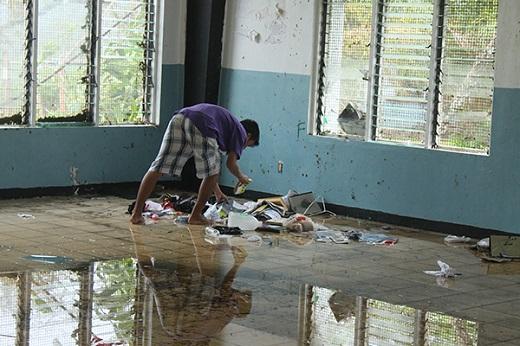
Weeks after Typhoon Maysak hit Micronesia at the end of March, the people are still struggling to pick up the pieces and recover from the destruction.

With sustained winds of 160 mph, Super Typhoon Maysak struck the Pacific region just before Easter, causing severe damage throughout Micronesia. Maysak struck the island of Chuuk on March 29, bringing down communications system from the island, and hit the island of Yap on March 31. Jesuits from the USA Northeast Province, the Province of Indonesia, members of the Jesuit Volunteer Corp and residents of Micronesia staff the two schools that suffered losses.
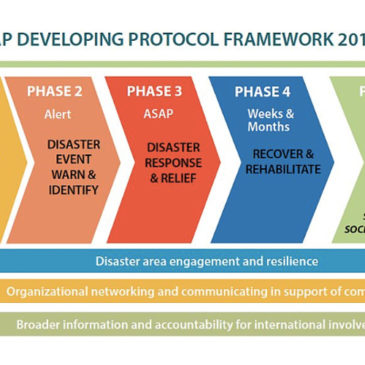
The Jesuit Conference of Asia Pacific (JCAP) is developing a protocol that outlines steps for Jesuits in responding to disasters in this part of the world. Responses to catastrophic events are collaborative in nature, joining local efforts and guiding important international support. This is an ongoing process with other organisations and there is much learning from the experiences of Jesuits on the ground. The effort is also to find ways to collaborate across different phases in disaster risk reduction and management (DRRM) that demand a wider range of coordination beyond disaster.
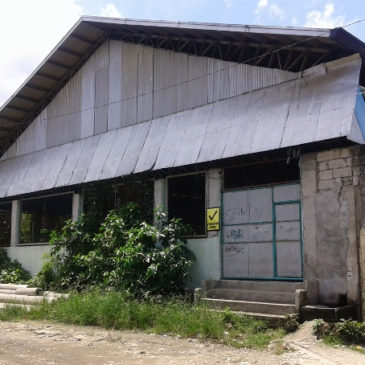
There is an increasing focus on disaster preparedness in the Philippines, although this is happening at different levels. The general public is learning how to use the available technologies for monitoring hazards and to understand the language used. Many communities are also focused on evacuation strategies and on identifying safe centres that can be used in the event of a disaster.
The Jesuits in Cambodia have proposed a fast from pollution this Lent. Why pollution? Their response is that “Pollution weakens our bodies and makes us vulnerable to many diseases such as diarrhoea, chest infections, cancers, respiratory and heart diseases. And the people most likely to be affected first are the poor, due to their already limited access to clean water, clean food and clean air. The poor suffer first.”
In support of this, they provide the following facts:

A global movement of Catholics working together on climate issues was launched on January 14 with a statement presented to Pope Francis during his papal visit to the Philippines.
An online programme to train sustainability coordinators in Jesuit schools and institutes within the Jesuit Conference of Asia Pacific has been launched.
Issues of equity and sustainability in mining projects are receiving greater scrutiny from Jesuit entities and individuals worldwide through the growth of the Governance of Natural and Mineral Resources (GNMR) Network.
There is no institution so old that it has nothing left to learn – and the Catholic Church must commit to learning about and changing its practices in relation to ecological issues. This was the message from Colombian Jesuit Fr José Mesa, Secretary of Primary and Secondary Education at the Jesuit Curia in Rome and one of the keynote speakers at the JCAP Education Colloquium in Sydney.
How we manage our natural resources on this planet, and do so in an inclusive way, is the challenge of present and coming generations. A three-day conference on Transformative Land and Water Governance held in the Philippines in May sought to address this challenge.