
Students hear the voices of refugees first hand

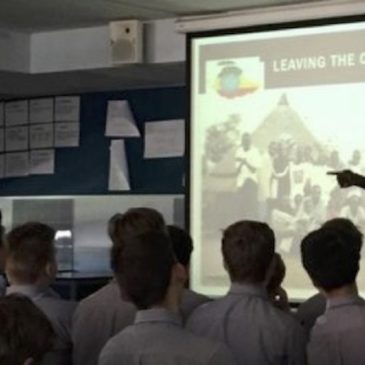
Jesuit Refugee Service Australia has teamed up with Refugee Council of Australia to create a programme that gives young people the chance to meet a refugee and hear first hand the reasons why people are forced to flee their homes.

“We’re seeing the biggest migration crisis since WWII, and yet, it’s not the voices of those being forced to flee their homes we hear, but the voices of the powerful.  At JRS we believe this needs to change,” said JRS Australia in its website.

Rowing into the deep

General Congregation 36 (GC 36) dominated Jesuit life during 2016.  The theme, “Row into the deep”, was derived from a message of Pope Francis to the Society of Jesus in 2014, echoing Jesus’ call to his disciples to “put out into the deep”.  In the Congregation logo, the IHS represents the Society’s boat in the Church; the waves are the troubled seas of our times into which Jesuits are invited to row with faith.

Building the Philippines’ first eco-friendly school

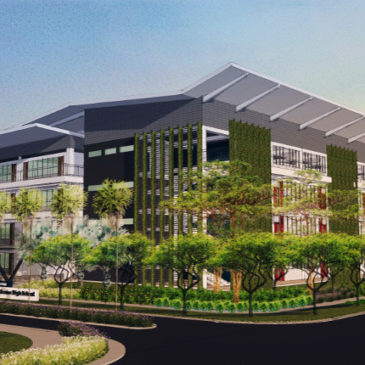
Ateneo de Davao University is building a new campus for its senior high school that is being touted as the first environmentally responsible school in the Philippines. The campus has been designed to create a contemporary, sustainable and transformative learning environment following Pope Francis’ environmental directives in his encyclical, Laudato si’.  The groundbreaking ceremony was held on February 15 and the school is expected to be completed in May 2019.

Igniting excellence in education through Ignatian formation

posted in: Education, JCAP News | 0

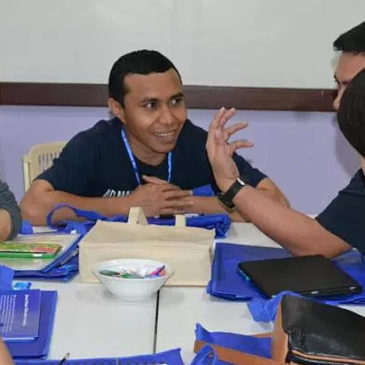
The Education Commission of the Jesuit Conference of Asia Pacific (JCAP) has launched a programme designed to address the various formation needs of Jesuit primary and secondary schools in the region. The “Ignatian Initiative for Teaching Excellence” (IGNITE) programme offers a selection of workshops for faculty and staff to support them in their role as Ignatian educators.

“The IGNITE programme is designed by practitioners for practitioners, in consultation with experts and specialists,” said Fr Johnny Go SJ, JCAP Education Secretary.

Building a community of Jesuit schools

posted in: Education, JCAP News | 0

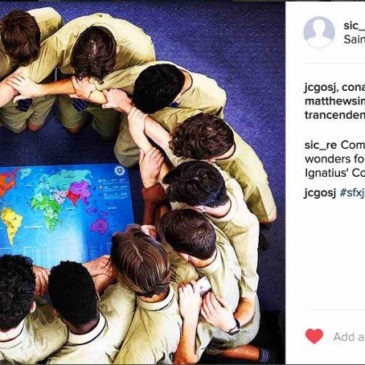
#sfxjcap2016.  In October this hashtag began appearing in Instagram as students, faculty and staff of Jesuit schools in Asia Pacific posted photographs of themselves and their friends in front of the Educate Magis map in their schools. The photos were entries to the St Francis Xavier Global Network Instagram Competition.

Educate Magis is an online community that connects educators from more than 2,000 Jesuit and Ignatian schools all over the world and the map shows the rich diversity and wide reach of the global network of Jesuit schools.

One foot in the air

posted in: Education, JCAP News | 0

One foot on the ground, another in the air – always on a journey to serve God.  This is an image Fr Ross Jones SJ, President of Saint Ignatius’ College, Riverview in Sydney, Australia uses to show what it means for students and teachers in a Jesuit school to be contemplatives-in-action.

A path to self-determination through education

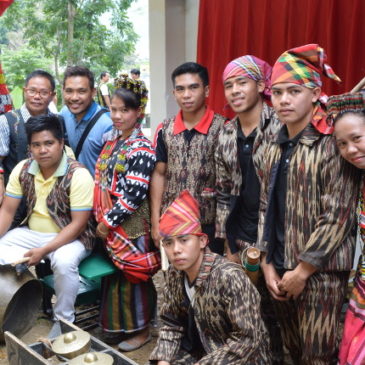
A close encounter with the Tboli communities in Lake Sebu in the Philippines reveals their great love and pride for their cultural identity. This can be felt in the way they assert and protect their rights and in their local governance. A spirit of unity, collaboration and openness manifests not only during festivities but also in the daily rigours of life.

A whole story of gratitude, renewal and hope

“There are a lot of stories we can tell about these two institutions, but they are a whole story of gratitude, renewal and hope”.  

The two institutions are Loyola House of Studies (LHS) and the Loyola School of Theology (LST) which this month concluded their yearlong golden jubilee celebration.  At the closing dinner on September 11, Fr Antonio Moreno SJ, Philippine Jesuit Provincial and Loyola School of Theology Vice-Chancellor, described the story of LHS and LST as a tale of appreciation and optimism.

Ateneo de Davao University underscores commitment to the environment

The southern Philippine island of Mindanao is home to an abundance of natural resources, chief among them are forests and aquatic resources that sustain and nourish ecosystems. But big agricultural developments and large-scale mining activities have resulted in land dispossession of indigenous communities, violence and environmental degradation.